


Caring for a loved one with dementia is demanding. Learn how adult day care, dementia programs, and OT provide dementia caregiver support.


Caring for the Caregiver: How Adult Day Care and Dementia Programs Support Families
November is National Family Caregivers Month, a time to recognize the spouses, adult children, and friends who care for loved ones at home. For families living with dementia, that care can be especially demanding. According to the Alzheimer’s Association, more than 11 million Americans provide unpaid care for someone living with Alzheimer’s or another dementia.
If you are one of them, this post is for you. It looks at what caregiving can take out of you, why your own well-being matters, and how adult day care, dementia programs, and occupational therapy provide practical dementia caregiver support.
About the 2025 Unsung Heroes List
City & State New York’s inaugural Unsung Heroes list, researched and written in partnership with journalist Lon Cohen, recognizes New Yorkers who are highly effective but operate largely under the radar — from nonprofit leaders to civic organizers and public servants who get things done behind the scenes. Read the full list →
The Hidden Weight of Dementia Caregiving
Dementia caregiving often grows gradually. It may start with reminders and rides to appointments, then expand to help with meals, bathing, medications, and safety around the clock. Many caregivers also work, raise children, or manage their own health at the same time.
Common challenges include:
- Constant supervision, especially when a loved one wanders or becomes confused
- Changes in behavior, mood, or sleep that are hard to predict
- Physical strain from helping with transfers, dressing, or bathing
- Less time for work, friends, and personal appointments
- Grief as a loved one’s abilities and personality change
None of this means you are doing anything wrong. It means the job is large, and few people can do it alone.
Recognizing Caregiver Burnout
Caregiver burnout is a state of physical and emotional exhaustion. It can build slowly, so it helps to know the signs:
- Feeling tired most of the time, even after rest
- Irritability, impatience, or feeling overwhelmed
- Withdrawing from friends or activities you used to enjoy
- Skipping your own medical appointments or meals
- Trouble sleeping or frequent illness
If you recognize yourself here, it is a signal to bring in more support, not a sign of failure. If you feel hopeless or depressed, talk with your own doctor.
How Adult Day Care Supports Caregivers
Adult day care provides a safe, supervised place for older adults to spend the day while caregivers work, rest, or take care of other responsibilities. For many families, it is the most reliable form of regular respite.
For caregivers, adult day care can mean:
- Predictable time off:set days and hours you can plan around
- Peace of mind:trained staff supervise your loved one throughout the day
- Help staying employed:many caregivers are able to keep working
- Better evenings at home:a loved one who has been engaged during the day may be calmer and sleep better
For your loved one, a day program offers social connection, meals, structured activities, and gentle exercise in a setting outside the home. You can read more about the participant’s experience in our post on how movement and memory care support seniors.
What a Dementia Program Adds
A dementia program is designed specifically for people living with memory loss. Staff understand how dementia affects communication, attention, and behavior, and they plan the day around that.
A dementia program may include:
- A consistent daily routine, which can reduce confusion and anxiety
- Activities matched to current abilities, such as music, reminiscence, and simple games
- Approaches that redirect agitation calmly rather than correcting
- Regular updates to families about changes staff notice
For caregivers, this means knowing your loved one is spending the day with people who understand dementia, and having a team that can share what they observe.

How Occupational Therapy Makes Home Care Easier
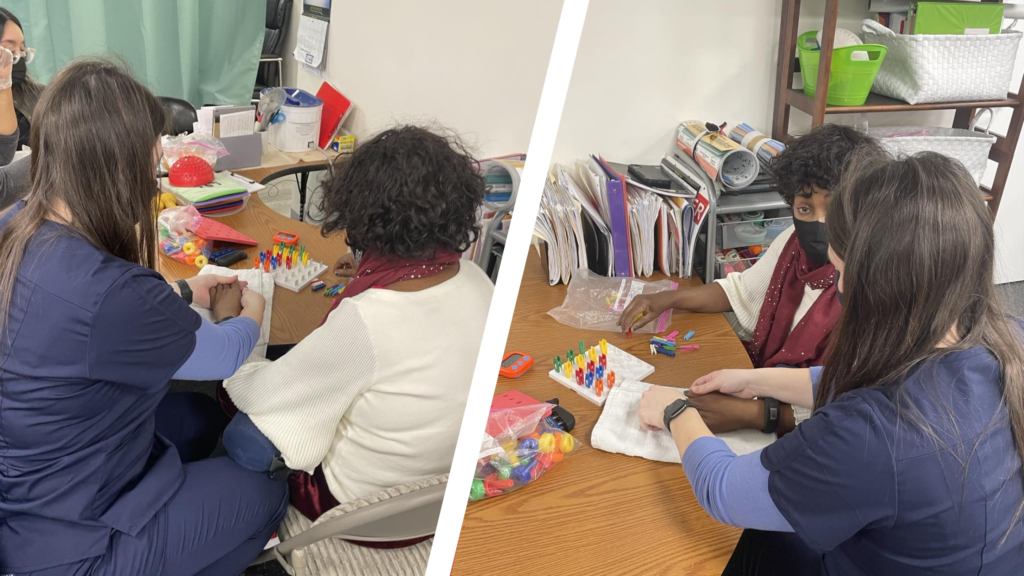
Occupational therapy focuses on everyday activities, and it can help the caregiver as much as the person living with dementia. An occupational therapist may:
- Assess your loved one’s abilitiesso you know which tasks they can still do and where they need help
- Simplify daily routineslike dressing, bathing, and eating with step-by-step cues and fewer choices
- Recommend home safety changessuch as grab bars, better lighting, and removing tripping hazards
- Teach safer transfer techniquesthat protect your back as well as your loved one
- Suggest strategies for wandering or sundowning,such as changes to the environment and daily schedule
Small changes recommended by an occupational therapist can make daily care less stressful and help your loved one stay as independent as possible.
Simple Ways to Care for Yourself
- Accept help when family, friends, or neighbors offer, and give them a specific task.
- Schedule regular breaksrather than waiting until you are exhausted.
- Keep your own appointments,including checkups and dental visits.
- Move your body,even a 15-minute walk while your loved one is at a day program.
- Connect with othersthrough a caregiver support group, in person or online.
Common Questions About Dementia Caregiver Support
How do I know when it is time for adult day care?
Common signs include a loved one who cannot safely be left alone, a caregiver who has no regular breaks, or growing isolation for either of you. Many families find it helps to start earlier, while a loved one can adjust more easily to a new routine.
Will my loved one be upset about going?
Some people need a few weeks to settle in. Starting with shorter days, keeping a consistent schedule, and describing it in positive terms often helps. Staff can share tips for a smoother transition.
Is adult day care only for people with dementia?
No. Adult day care serves older adults with a range of needs. A dementia program offers additional structure and specialized support for people with memory loss.
How is adult day care paid for?
Options vary. Some families pay privately, while certain long-term care insurance policies and Medicaid programs may help. Call the program to ask what applies to your situation.
Conclusion
Caring for someone with dementia is an act of love, and it is also hard work. Taking care of yourself is part of taking care of them. Adult day care, a dedicated dementia program, and occupational therapy can share the load, give you time to recharge, and help your loved one stay engaged and safe.
If you are caring for a family member in Rockland County, the team at Active Rockland and Active Adult Day Care in West Nyack is here to help. Call 845-354-7779 or book an appointment to learn more or arrange a visit.
Book a Consultation
It’s easy and free!