
Avoid holiday travel back pain with 12 practical tips for long car rides, crowded flights, heavy luggage, and stiff arrivals.


Holiday Travel Back Pain: 12 Tips for Car Rides and Flights
Thanksgiving week is one of the busiest travel times of the year. Whether you are driving to see family or squeezing into a middle seat, hours of sitting, heavy bags, and tight spaces can leave your back, neck, hips, and knees stiff before the holiday even starts.
The good news is that a little planning goes a long way. These 12 tips from a physical and occupational therapy perspective can help you prevent holiday travel back pain and arrive ready to enjoy the visit.
Quick answer: To prevent holiday travel back pain, support your lower back while sitting, take a movement break every 1 to 2 hours, lift luggage with your legs and keep it close to your body, and do simple seated stretches along the way.
About the 2025 Unsung Heroes List
City & State New York’s inaugural Unsung Heroes list, researched and written in partnership with journalist Lon Cohen, recognizes New Yorkers who are highly effective but operate largely under the radar — from nonprofit leaders to civic organizers and public servants who get things done behind the scenes. Read the full list →
Before You Leave
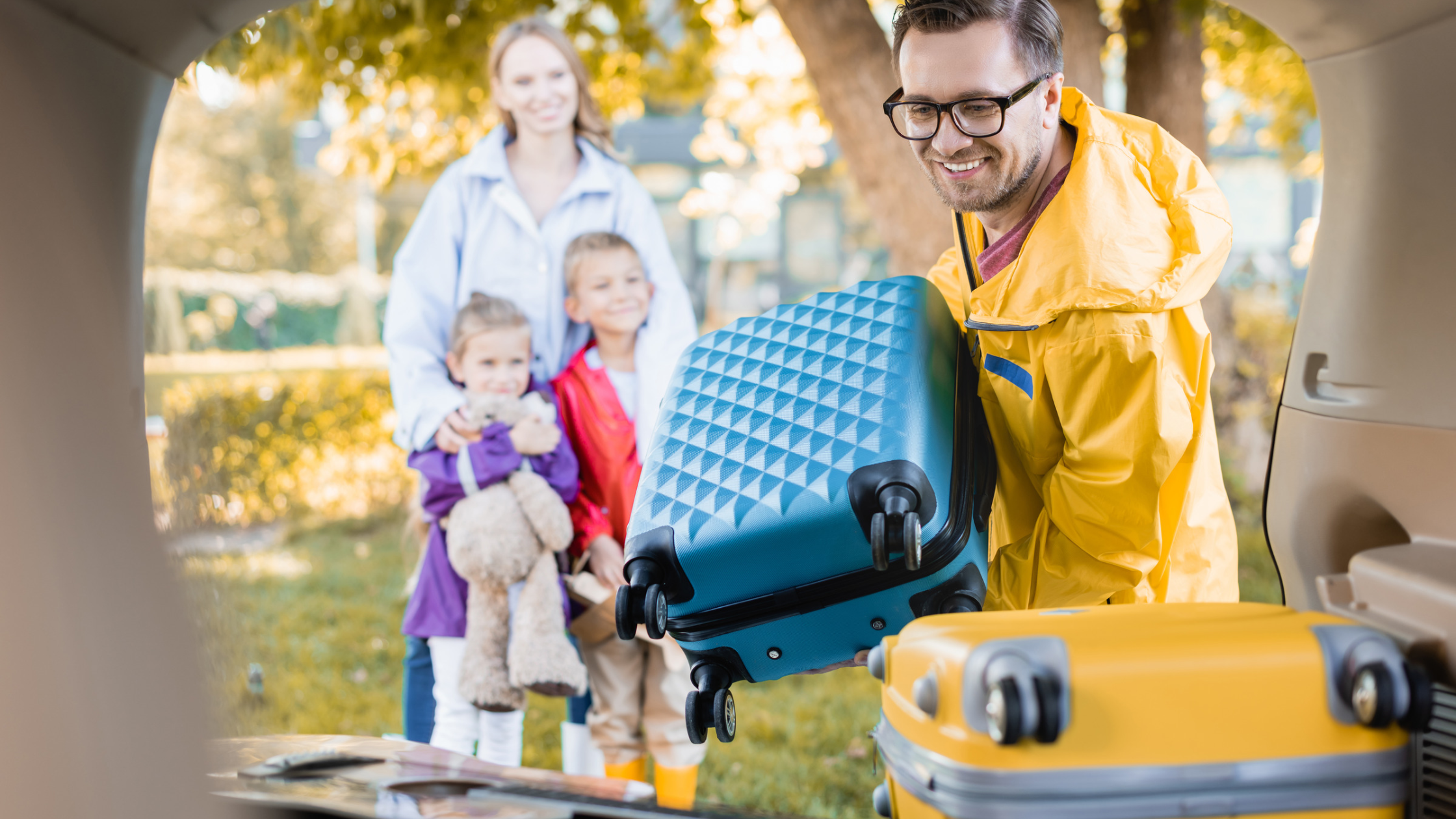
1. Pack Lighter and Split the Load
Two medium bags are easier on your back than one heavy one. Choose a suitcase with four spinner wheels so you can push it beside you instead of dragging it behind. If you are bringing gifts, consider shipping them ahead.
2. Plan Your Breaks in Advance
For road trips, map out a stop every 1 to 2 hours. For flights, book an aisle seat when you can so it is easier to get up and walk.
3. Pack a Comfort Kit
Keep a small pillow or rolled towel for lower back support, a travel neck pillow, a water bottle, and any medications in an easy-to-reach bag. If you have a heat wrap that works for you, pack that too.
On the Road
4. Set Up Your Seat Before You Drive
Sit with your hips all the way back in the seat. Adjust it so your knees are about level with your hips and you can reach the pedals without stretching. Keep the backrest slightly reclined, around 100 to 110 degrees, rather than bolt upright.
5. Support Your Lower Back
Place a small pillow or rolled towel in the curve of your lower back. Take your wallet or phone out of your back pocket, since sitting on it for hours can tilt your pelvis and irritate the hip and lower back.
6. Get Out and Move Every 1 to 2 Hours
Even five minutes helps. Walk around, gently lean back with your hands on your hips, roll your shoulders, and do a few calf raises. Passengers can also shift positions and do the seated stretches below between stops.
Therapist tip: Change drivers when you can. Sharing the wheel lets each person rest and move more often.
In the Air
7. Lift Carry-On Bags the Smart Way
To place a bag in the overhead bin, lift it first to the armrest or seat, then up into the bin, keeping it close to your body. Bend at the hips and knees rather than the waist, and avoid twisting while holding weight. Do not hesitate to ask a flight attendant or fellow passenger for help.
8. Support Your Neck and Back in Your Seat
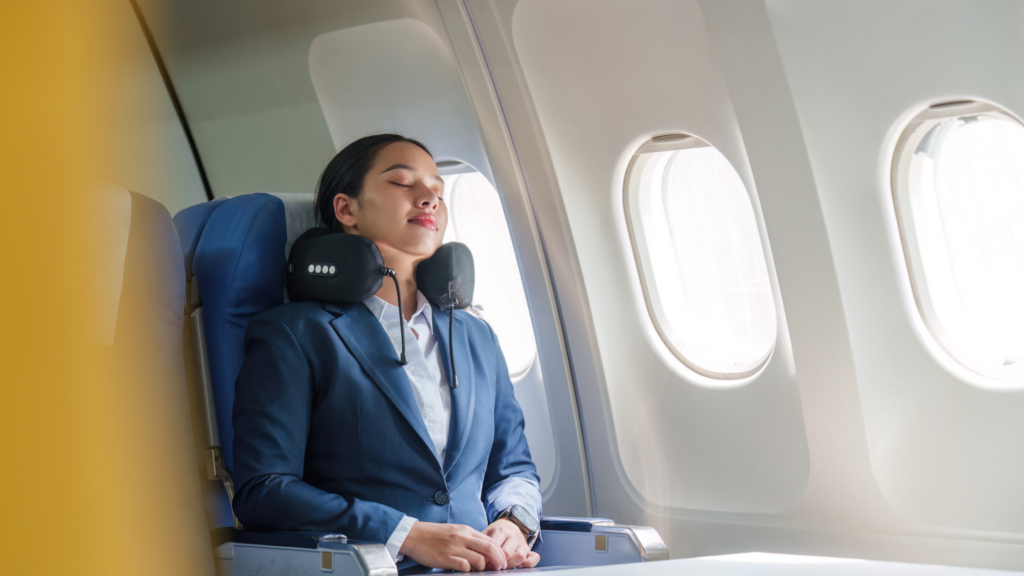
Use a neck pillow to keep your head from dropping forward while you rest. A rolled sweater behind your lower back can make a stiff airline seat more comfortable. Hold your phone or tablet closer to eye level to avoid looking down for long periods.
9. Keep Your Legs Moving
On longer flights, stand and walk the aisle when it is safe to do so. While seated, pump your ankles up and down and tighten your calf muscles every 30 minutes. This helps circulation and reduces stiffness. If you have a higher risk of blood clots, ask your doctor whether compression stockings are right for you.
When You Arrive
10. Walk Before You Settle In
After a long trip, take a short walk before sitting down again. A few minutes of movement helps loosen stiff hips, knees, and back muscles.
11. Pace Holiday Tasks
Holiday cooking, hosting, and cleanup often mean hours of standing and bending. Use a stool for food prep, slide heavy pots instead of lifting them, and take turns with family members. Unfamiliar homes can also bring new tripping hazards, so keep paths clear and use a night light if needed. See our fall prevention tips for more.
12. Sleep Smart in a Guest Bed
A soft mattress or pull-out couch can leave you sore. Side sleepers can place a pillow between the knees, and back sleepers can place one under the knees. Pack your own pillow if a familiar one helps you sleep comfortably.
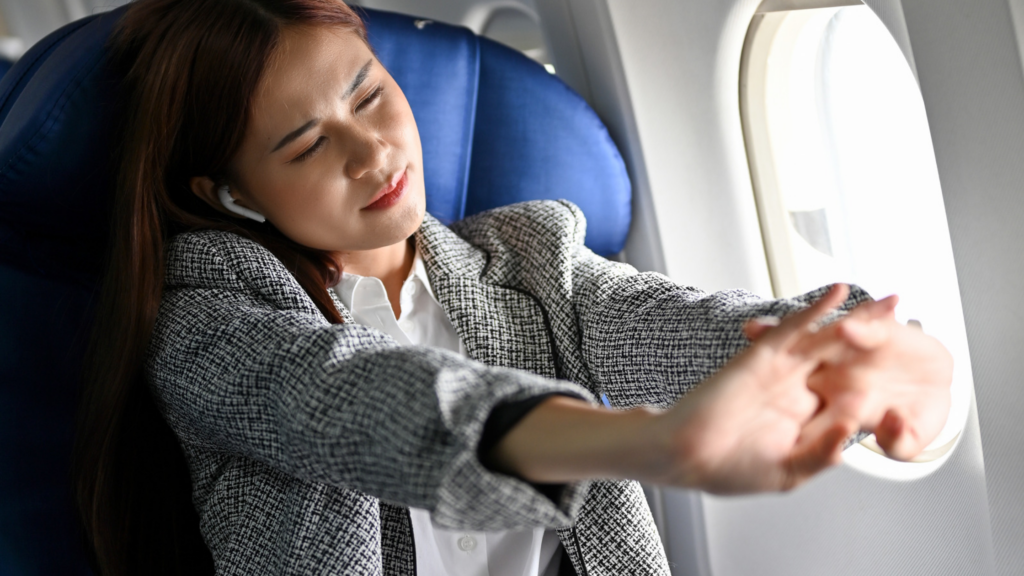
Simple Seated Stretches for Travel
These gentle moves can be done in a car or airplane seat. Move slowly and stop if anything causes sharp pain.
| Stretch | How to Do It | Repeat |
|---|---|---|
| Seated pelvic tilt | Sit tall. Gently flatten your lower back against the seat, then arch it slightly. | 10 times |
| Shoulder rolls | Roll your shoulders up, back, and down in slow circles. | 10 times |
| Chin tucks | Gently draw your chin straight back, as if making a double chin. Hold 3 seconds. | 10 times |
| Seated twist | Sit tall and gently rotate your upper body to one side, using the armrest for light support. | 3 each side |
| Ankle pumps | Point your toes down, then pull them up toward your shins. | 20 times |
| Knee lifts | Lift one knee a few inches off the seat, then lower. Alternate sides. | 10 each side |
How Physical and Occupational Therapy Can Help
If holiday travel back pain or joint stiffness tends to flare up for you, a little preparation can help. Physical therapy can address the stiffness, weakness, or movement habits that make long sitting uncomfortable, and give you a short routine to use on the road. Our post on back, knee, and shoulder pain explains common causes.
Occupational therapy focuses on the practical side of travel and daily tasks. An occupational therapist can suggest easier ways to pack, carry, and manage luggage, recommend helpful equipment, and plan energy-saving strategies for older adults or anyone with arthritis or limited endurance.
If you come home sore and it does not settle within a week or two, an evaluation can help get you back on track. In New York, you may be able to start physical therapy without a referral.
When to Seek Medical Care
Get medical help right away for swelling, pain, warmth, or redness in one calf or leg after travel, or for sudden shortness of breath or chest pain, since these can be signs of a blood clot. Also seek care for back pain with numbness in the legs, weakness, or changes in bladder or bowel control.
Your Holiday Travel Checklist
Save or share this list before your trip:
☐ Pack two lighter bags instead of one heavy one
☐ Choose a spinner suitcase you can push beside you
☐ Bring a lumbar pillow or rolled towel and a neck pillow
☐ Plan a stop every 1 to 2 hours or book an aisle seat
☐ Adjust your seat and empty your back pockets before driving
☐ Lift bags in two steps and keep them close to your body
☐ Do ankle pumps and seated stretches along the way
☐ Walk for a few minutes when you arrive
☐ Pace holiday cooking and hosting tasks
Travel Comfortably This Holiday Season
Holiday travel back pain does not have to be part of the season. Small habits like supporting your spine, moving often, and lifting smart can make the trip easier and leave you more energy for time with family.
If back or joint pain is making travel harder, the team at Active Rockland in West Nyack and Haverstraw can help with physical and occupational therapy before or after your trip. Call 845-354-7779 or book an appointment. Safe travels from all of us.
Book a Consultation
It’s easy and free!